The first event in the Astrodome was held on April 9, 1965, when the Houston Astros played the New York Yankees in exhibition baseball. The first football game was played in the Astrodome on September 11, 1965, when Tulsa University defeated the University of Houston by a score of 14–0. Professional football established itself in the Astrodome when the Houston Oilers began playing all of their home games there after a preseason exhibition game with the Washington Redskins on August 1, 1968. Seating capacity of the Astrodome for baseball was 52,000, for football about 62,000, and for some events, 66,000. The stadium has a clear span of 642 feet, an inside height of 208 feet, a lighting maximum of 300 footcandles, an air-filtering system of activated charcoal, and a man-made field cover called Astroturf.

Hofheinz ordered the plastic roof painted because outfielders had trouble tracking fly balls during daylight in the bright glare and criss-cross network of girders overhead. The lack of sunlight kills the grass, but the Chemstrand Company, then experimenting with an outdoor artificial carpet, produced what came to be called AstroTurf. Hofheinz, starting in 1966, used this instead of natural grass. Over time, questions were raised about injuries suffered from the harder surface, although numerous other stadiums elected to use it. The Orange played their first football game at the Carrier Dome on September 20, 1980.

With a capacity of 49,057, the Carrier Dome is the largest dome structure on any college campus in the country. A three tier grandstand encloses the entire Fieldturf playing surface. The dome weighs 220 tons and is made of Teflon coated fiberglass.

When snow approaches the Carrier Dome it is heated to 145 degrees to prevent it from collapsing. In March 1993, the dome was deflated because nearly four feet of snow fell in the Syracuse area. In May 2018 the university unveiled plans to renovate the Carrier Dome. The feature most fans notice is the large HD videoboard that is located above the center of the playing field. The Houston Oilers made their debut at the Astrodome on September 9, 1968.

In order for football to be played at the Astrodome, two sets of 5,000 seats could be moved to form a football gridiron. In 1987 Oilers owner, Bud Adams, threatened to move the team to Jacksonville but Houston officials renovated the Astrodome adding 10,000 seats and additional luxury suites. This expansion increased the seating capacity to over 60,000 for football. The original scoreboard was replaced by new video boards in the upper deck.

What Nfl Teams Have A Dome Stadium By the mid 1990s, both tenants of the Astrodome, the Oilers and Astros wanted new individual stadiums. Adams was not satisfied as he began to lobby for a new dome stadium to be built in downtown Houston. In 1993 Adams was willing to contribute $85 million to a stadium but Houston officials and residents were not willing to fund a new stadium. After failing to receive support for a stadium the Oilers relocated to Nashville. The Oilers played their last game at the Astrodome on December 21, 1996.
The Astros played two more seasons at the Astrodome before moving into Minute Maid Park in downtown Houston. In 2000, Houston was awarded an expansion NFL franchise, the Houston Texans. It is no longer used to host any events and its future remains uncertain. In Fall 1989, due to demands from the Houston Oilers the capacity of the stadium increased to 54,816 as the grandstands were extended into the outfield, now circling the playing field. Two manual scoreboards were added as part of the outfield walls in both left and right fields.
By the mid 1990s, both the Astros and Oilers began to want new stadiums built. After failing to receive funding for a new stadium, the Oilers moved to Tennessee after the 1996 NFL season. However, funding was approved for a new Astros ballpark in downtown Houston.
The Astros played three more season at the Astrodome, playing their final game on October 9, 1999. Today, the Astrodome remains virtually idle as it sits in the shadow of the Houston Texans home, NRG Stadium. Since its closing after the 1999 season, the Astrodome has sat empty.

In 2016 nearly all of the interior fixtures including the seats were stripped from the stadium. In February 2018 Harris County commissioners approved a $105 million redevelopment of the Astrodome. This plan includes raising the ground level two floors to create nearly 1,400 parking spaces that can also be used for festivals, conferences and commercial uses.
Construction is expected to begin in October 2018 and be complete by February 2020. On the afternoon of January 3, l962, seven armed men in cowboy hats met on the outskirts of Houston. The site was dismal, known for damp summers and mosquitoes the size of turkey buzzards. At the appointed hour, the men took their Colt .45s, fired them into the earth and thus broke ground for a stadium to house the city's new baseball franchise, a team then known as the Colt .45s and now called the Astros.

The men were also breaking ground-or so many Houstonians were ready to argue-for a new millennium in American sports. The building they were about to put up was no mere ballpark but an indoor sports theater, a palace even, with upholstered seats, air-conditioning and a Louis XIV bedroom in a VIP suite, all under a steel dome spanning 642 feet. "This is going to be the sports showplace of the nation," said Judge Roy Hofheinz, president of the Houston Sports Association. But Hofheinz spoke wisely when he said other cities would follow. Since the Astrodome opened in 1965, 15 enclosed stadiums have gone up under roofs of steel, wood or, most often, fabric.

The newest dome, in St. Petersburg, Florida, is due for completion in 1989-a grand gesture of civic optimism, since there is no guarantee that a professional baseball or football team will start up there anytime soon. The Carrier Dome, home of the Syracuse Orangemen, is one the most unique stadiums in college football and the largest domed stadium on a college campus. Built for several university sporting programs, the Carrier Dome has hosted many events over the past four decades. By the middle 1970s, Syracuse University decided it was time to build an indoor facility to host football, basketball, track and many other sports. By 1979 plans were approved and in April construction began on the massive dome stadium.

At a cost of $26.85 million, the Carrier Dome was completed by September 1980. The stadium was named after the Carrier Corporation paid $2.75 million for the naming rights. Then in 1930 the city of Atlantic City, New Jersey built a regulation-sized football field inside the Atlantic City Convention Center. The playing surface in the earlier years consisted of natural grass sod that was grown outside and then moved indoors for the game.
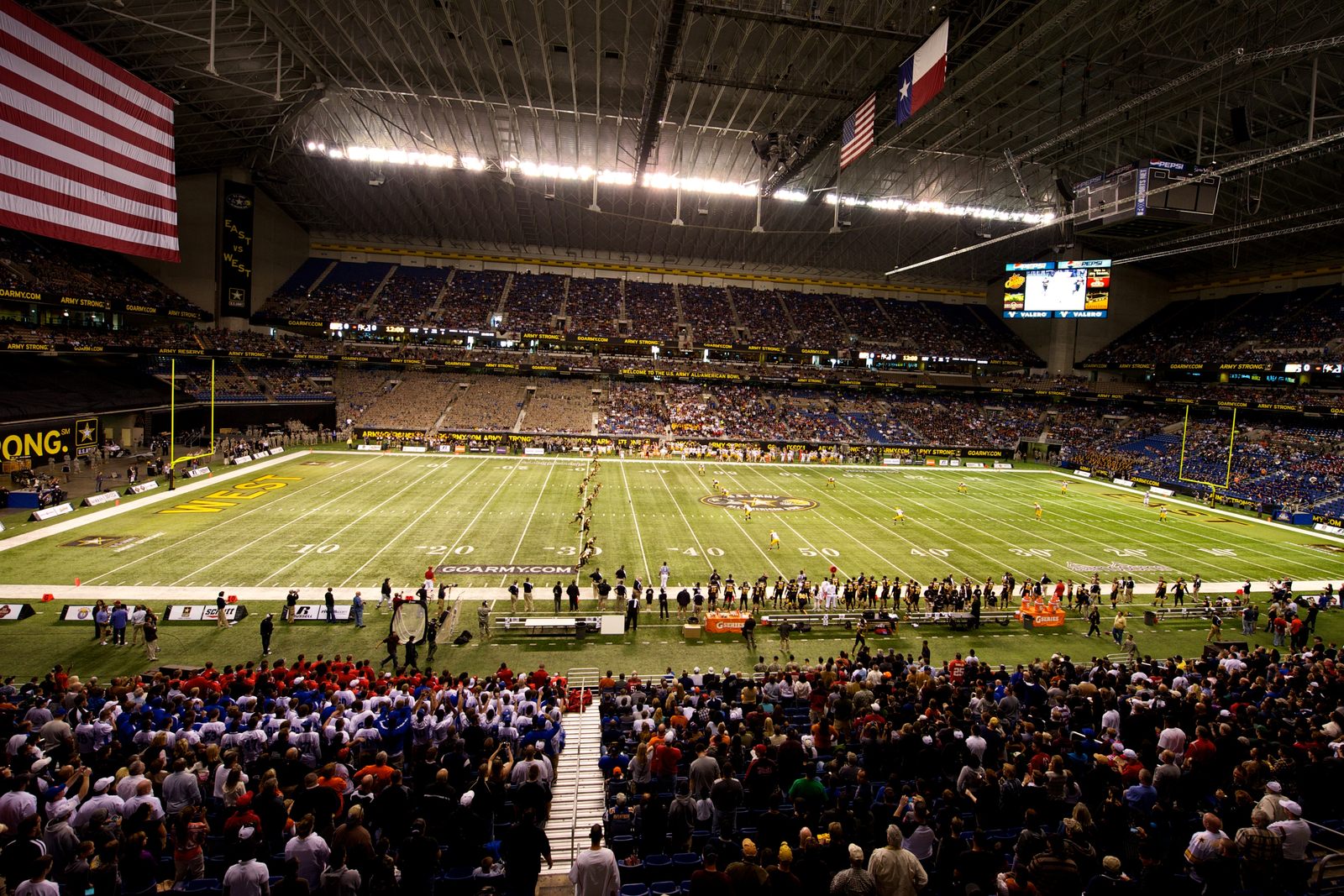
From 1961 until 1973, this indoor facility was home to the "Boardwalk Bowl", a post-season game involving small college teams. The "Liberty Bowl" played in the Convention Center in 1964 before its relocation to Memphis. Conventional open stadiums gravitate to the outskirts of the city, where land is cheaper and there is ample room for parking. With only 15 or 20 major events at a football stadium or 81 games at a baseball stadium, it's hard to justify paying downtown real estate prices. But with a lid, Geiger says, an ordinary stadium becomes "an entertainment machine" capable of accommodating 250 events a year and, when it is located at the center of the city, hotels and restaurants tend to spring up around it.
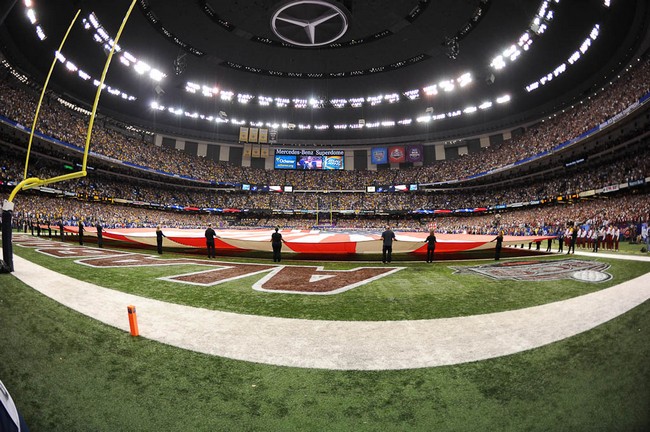
In its first ten years, the Superdome's boosters claim, it had a $2.678 billion economic impact on the community. Known as "The Eight Wonder of the World", the Astrodome hosted many sporting events for more than 40 years. Its history stretches back to the mid 1950s, when a domed stadium was planned by Judge Roy Hofheinz. Trying to attract major league team for the Houston area, Hofheinz built a model of a domed stadium. The primary purpose of building a stadium was to attract a professional baseball team.

Voters then approved a $18 million bond to build a stadium and construction began January 3, 1962. The stadium would be able to host numerous events from baseball to football to boxing matches. The first fully-enclosed sports stadium and first air-conditioned event venue of its size seated over 70,000 fans with enough space to include an indoor chapel and bowling alley. The Harris County Domed Stadium was the first fully-integrated public sports and entertainment venue in Houston.

For nearly forty years, the iconic structure played host to sporting events, conventions, and concerts. From kings, even Elvis himself, and presidents to football and rodeo, the Astrodome has seen it all. Harris County Commissioners Court has recently voted to begin a redevelopment plan that will revitalize the "Dome" to set the stage for many more historic moments. Oakland's O.co Coliseum is the only remaining stadium shared by a Major League Baseball team and an NFL team. To this day, early season Raiders games feature the distinctive infield cutout that conjures up memories of a bygone era in sports -- when football teams played home games in stadiums designed primarily for baseball.

The Raiders moved into the Coliseum in 1966 and played there until their move to Los Angeles following the 1981 season. When the team moved back to Oakland, the Raiders again called the Coliseum home. Nicknamed the "Eighth Wonder of the World," the Astrodome was built to protect an entire sports area suitable for baseball and football, with seating for 66,000 spectators. The Lucite-paneled dome, spanning 642 feet , is supported by a steel lattice. The entire interior is air-conditioned at 74 °F (23 °C) and fully lighted with power from its own electricity-generating system.

The playing field, constructed 30 feet below grade, spans 150,000 square feet. When built, the stadium included an electronic scoreboard measuring 60 × 300 feet (18 × 91 metres) and was the first arena to have luxury "box" seating, a feature included in almost all subsequent large-scale stadiums in the U.S. The Rams played nine games in anticipation of their new stadium, winning their first four games and then dropping the next four of five. And after three long years of waiting and meticulous construction, the stadium proposal on which the city rested its future in football had finally become a reality. The long-awaited Dome was complete and ready to meet its destiny of triumph and tribulation.

With the city in a state of buzz, the Dome's opening game easily surpassed the city's previous attendance record, the venue's additional seating providing the means to do so. The 65,000 fans in attendance were able to go home as happy as they came, their team providing an exhilarating victory against their then divisional rivals, the Carolina Panthers. Despite showing initial promise with their early victories, the Rams lost their last five of six to finish the year 7-9.

Over the next three seasons, the Rams got progressively worse, finishing 6-10, 5-11, and in 1998, 4-12. The Saints are the only team to have won a Super Bowl at home, a domed stadium. Miami's Hard Rock Stadium hosted the championship game, and the Colts' home games were played in a retractable roof stadium. What really got the dome boom going was an outlandish entry in the architectural competition for the U.S. exhibition hall at Expo '70 in Osaka, Japan. Davis-Brody, a New York firm, designed a sort of pumpkin on top of an inverted pyramid, together 30 stories high.

The pumpkin was to be built of fabric and held up by air, a type of structure that until then had been used to house only tennis courts and military radar installations. The architects scouted around for an engineer who could flesh out the design concept and they wound up with David Geiger, then a young adjunct professor at Columbia University. The design won, but Geiger found himself stuck with a site that was prone to earthquakes and 150mile-an-hour typhoons. In desperation, the design team took a vertical cross section of the pumpkin and laid it flat on the ground, preserving the blocky, superelliptical outline-and very little else-from the original plan. It consisted of an earthen berm topped by a concrete ring and enclosed two and a half acres under a vast fabric lid.
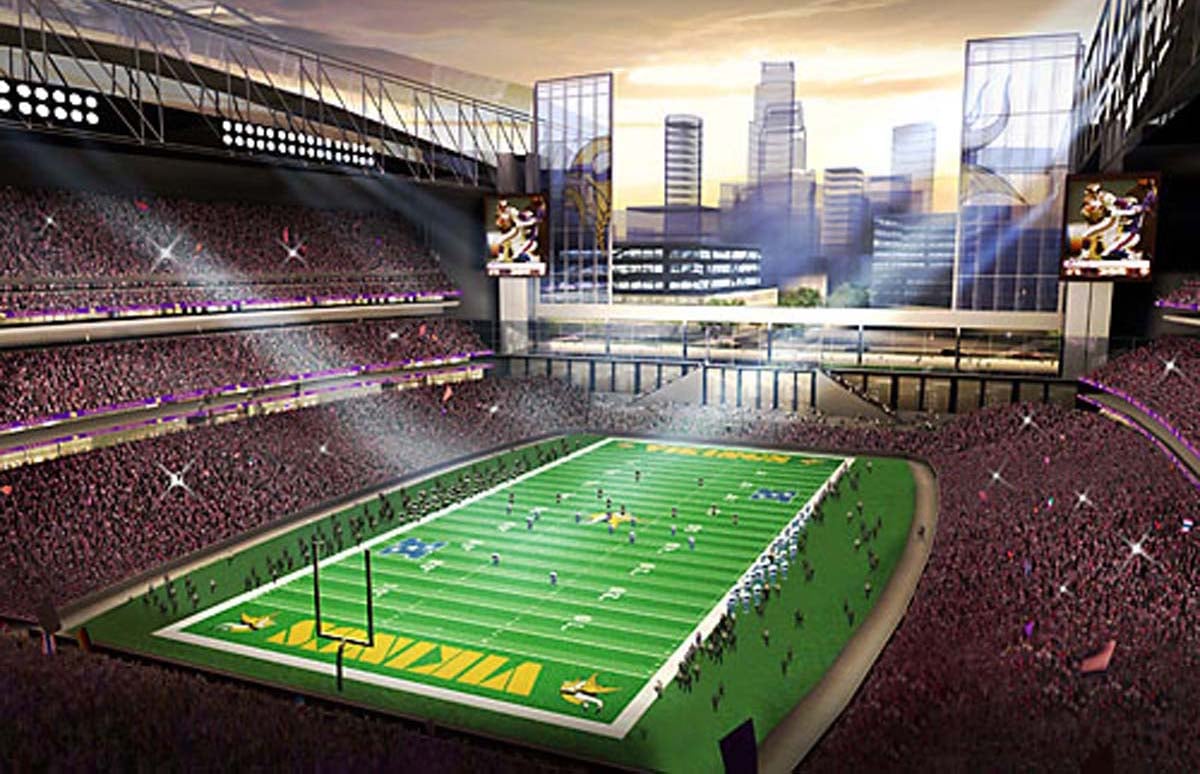
But it set the pattern for most of the domed stadiums built since then. A system of fans held up the fabric roof by boosting air pressure inside. A web of cables thrown over the top secured the fabric and divided it into pillowy sections. Figuring out the cable pattern was the hardest thing, even with the help of an advanced computer. Geiger found that a standard grid, with cables crossing at right angles, caused the roof to sag at the perimeter.

But one Saturday, in a moment of inspiration, he realized he could eliminate the problem by running the cables diagonally. This "skewed symmetry" still characterizes almost all such roofs. In April 2006, Jackson County, Missouri taxpayers approved a 3/8 cent sales tax, which raised approximately $212.5 million for improvements at the facility. Additionally, the state of Missouri provided $37.5 million and the Hunt family contributed $125 million to the project. The renovations began in January 2007 and were completed in time for the start of the 2010 season.
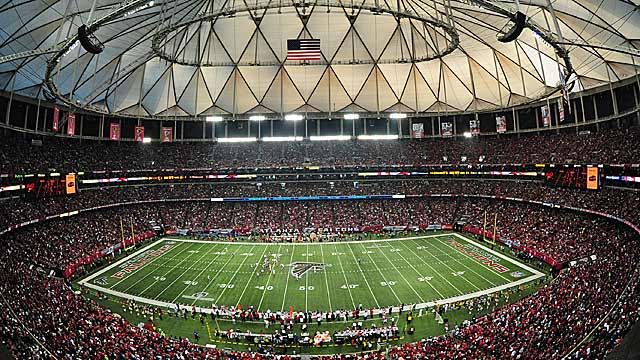
The improvements helped GEHA Field at Arrowhead Stadium maintain its longstanding status as one of the top venues for fans to experience the excitement of collegiate or NFL football. The renovation included the construction of the Ford Fan Zone on top of the upper deck on the south side of the stadium. This level included a new press box, premium seats and luxury suites.

The expansion added 500,000 square feet to the footprint and 50% more concession stands and 80% more restrooms. Opening in 2006, the stadium offers outstanding, unobstructed views for 63,400 fans with the ability to expand to 73,000 for mega-events. The stadium has hosted two Super Bowls , two National College Football Championship games, and the 2017 NCAA Final Four Basketball Championship. Encompassing over 1.7 million square feet of space, State Farm Stadium has numerous premium seating and space options including 88 lofts and 7,505 club seats.

In the future, more franchises may opt to break ground on domed and retractable-roof venues, but the data indicates it isn't in their best interest, unless every team is on an equal playing field. Until then, the teams with open-field stadiums appear best suited to march on to victory, especially when the games count the most. The actual dome was 18 stories above the playing field and consisted of "Lucite" skylights that were planned to allow the natural grass playing field to stay alive. During afternoon games outfielders were blinded by the sunlight. Thirty percent of the panels were coated with paint to reduce the problem but that caused another problem. The natural grass playing field died due to the lack of sunlight A new type of turf that became famous at stadiums throughout the country during the 1970s was developed.
Named after the team, Astroturf was a green surface of nylon grass. Yes, Soldier Field did open in 1924 as a major event facility, seating 74,280 for major events like Notre Dame/Northwestern football soon after opening. But pro football eschewed it until 1959, when the Chicago Cardinals played a season there before departing for St. Louis. It wasn't until 1970 that the Chicago Bears moved to Soldier Field from Wrigley Field, and it came with some changes, as the seating capacity was downsized. A 2003 renovation dramatically altered Soldier Field, keeping the historic exterior while adding a next-generation seating bowl. Club seats are located along both sidelines of the playing field, offering optimal sightlines and exclusive amenities.

Televisions are available throughout the club floor for viewing stadium games. During that season Oilers owner Bud Adams indicated that he was unhappy with the Astrodome, and he threatened to move to Jacksonville if the stadium situation did not improve. His displeasure prompted a $67 million renovation that expanded seating capacity by 10,000 and provided other amenities that Adams demanded. The original scoreboard was dismantled and removed to make room for some of those seats. The Oilers were a competitive team, with a passionate fan base, so the expectation was that the renovation would keep Adams in the Astrodome for at least 10 years. The Astrodome revolutionized the nature of sports surfaces, ushering in the use of artificial turf.


No comments:
Post a Comment
Note: Only a member of this blog may post a comment.